

The Water Crisis
ENGLAND’S WATER SYSTEM HAS LOST PUBLIC TRUST
Sewage pollution.
Rising bills.
Ageing infrastructure.
Mounting debt.
Weak regulation.
Most households cannot change their regional water and sewerage provider.
That makes accountability especially important.
WHO SHOULD THE SYSTEM SERVE?
The public and the environment? Or investors and creditors?
SEE THE EVIDENCE
THE CRISIS IN SIX FIGURES
291,492
monitored storm-overflow spill events in England during 2025
Environment Agency, 2026
75
serious pollution incidents caused by England’s water and sewerage companies in 2024
Environment Agency, 2025
470
Thames Water sewerage pollution incidents in 2024
Environment Agency, 2025
£18.5 BILLION
Thames Water statutory net debt at 31 March 2026
Thames Water, Annual Results 2025–26
£152
increase allowed in Thames Water’s average household bill between 2024–25 and 2029–30 before inflation
Ofwat, PR24 Final Determination for Thames Water, December 2024
APPROXIMATELY £300 BILLION
the scale of long-term water-sector infrastructure expenditure being discussed
National Audit Office estimate, cited in Defra, A New Vision for Water, January 2026
SEWAGE
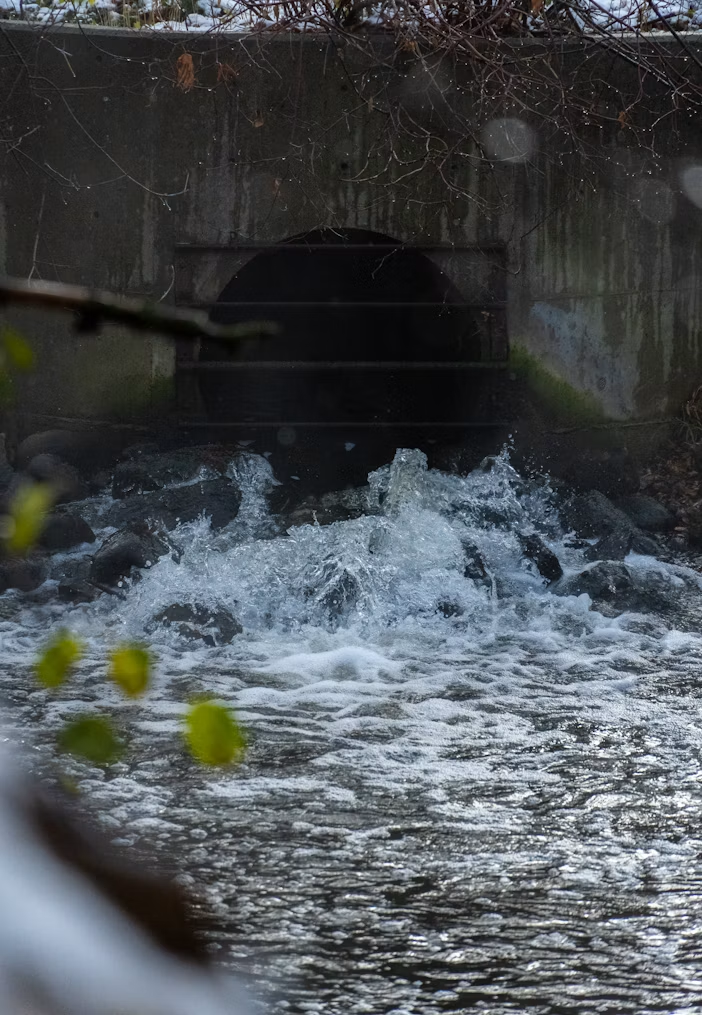
Storm overflows exist to protect sewer systems during exceptional conditions.
They were never intended to become a substitute for adequate capacity, maintenance and modern wastewater treatment.
Climate change, heavier rainfall and urban development increase pressure on old combined sewers.
Those pressures make investment more urgent.
They do not make pollution inevitable.
WHY ARE OUR RIVERS STILL POLLUTED?
DEBT
Debt is not inherently wrong.
Infrastructure serving several generations can legitimately be financed over long periods.
The danger begins when an essential monopoly becomes so highly leveraged that financing costs, creditor interests and corporate survival begin to shape public policy.
FOLLOW THE MONEY
BILLS
Customers accept that major infrastructure must be paid for.
But they are entitled to ask; –
Why should current bill-payers bear the full cost of correcting decades of underinvestment?
What losses should fall upon investors and lenders when financial structures fail?
How can customers know that higher bills will be protected for infrastructure renewal?
Affordability must be central to reform
REGULATION
England’s regulatory system became complex because ordinary competition between regional pipe and sewer networks is impossible.
The central question now is; –
CAN REGULATION PREVENT FAILURE RATHER THAN SIMPLY RECORD IT AFTERWARDS?
WHY DID REGULATION FAIL?

THE WHOLE CATCHMENT
Water-company pollution is only one part of river decline.
Agriculture, highways, development, urban run-off, chemicals, misconnections and climate change also matter.
A credible solution must therefore manage the entire catchment.
That means the land, rivers, roads, farms, towns, sewers, treatment works, wetlands, reservoirs and communities through which water moves.
THE CHOICES ENGLAND NOW FACES
OWNERSHIP
Who should control essential water infrastructure?
DEBT
Who bears losses when financial structures fail?
INVESTMENT
How should renewal be funded fairly?
REGULATION
How can failure be prevented?
ENVIRONMENT
How should whole river systems be restored?
ACCOUNTABILITY
How should the public gain a meaningful voice?