
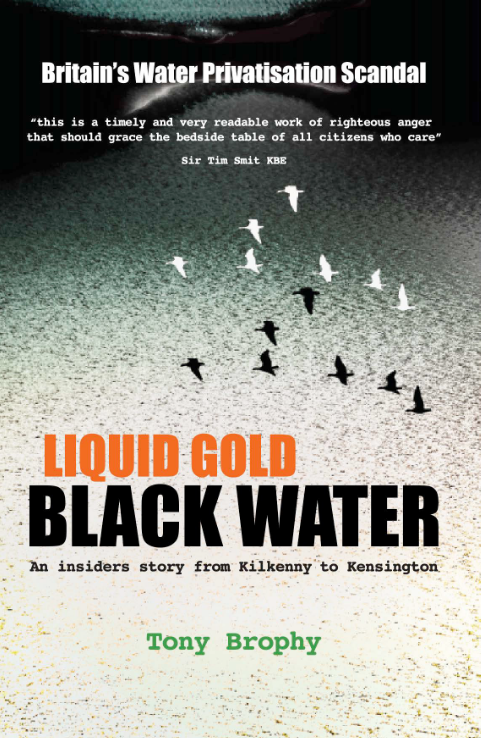
LIQUID GOLD BLACK WATER
Britain’s Water Privatisation Scandal
How I Got Dropped in the Shit
A remarkable personal story.
A documented history.
A national scandal.
Tony Brophy experienced Thames Water not from the public gallery, but through a commercial relationship that changed his company and his life. His story raises a much bigger question; –
WHOSE INTERESTS SHOULD THE WATER INDUSTRY SERVE?
The public and the environment – or investors and creditors?
WHY THIS MATTERS

SIR TIM SMIT KBE
Co-founder, Eden Project
“This is a timely and very readable work of righteous anger that should grace the bedside table of all citizens who care.”
THE WATER CRISIS IN 60 SECONDS
England’s modern water and sewerage system was built over generations.
In 1989 the regional water authorities of England and Wales were privatised.
The companies inherited essential infrastructure and regional monopolies.
Households still cannot choose another sewer network.
Over the decades, major investment took place but debt also grew across parts of the industry, large sums were paid to investors, infrastructure pressures intensified and sewage pollution became a national political scandal.
Customers are now being asked to fund another enormous programme of renewal.
The public ultimately carries the risk if an essential water company fails.
So the question is no longer simply: HOW DO WE REGULATE WATER COMPANIES BETTER?
It is:
WHO SHOULD CONTROL THEM AND WHAT SHOULD THEY EXIST TO DO?
FOLLOW THE MONEY
THE STORY FROM THE INSIDE
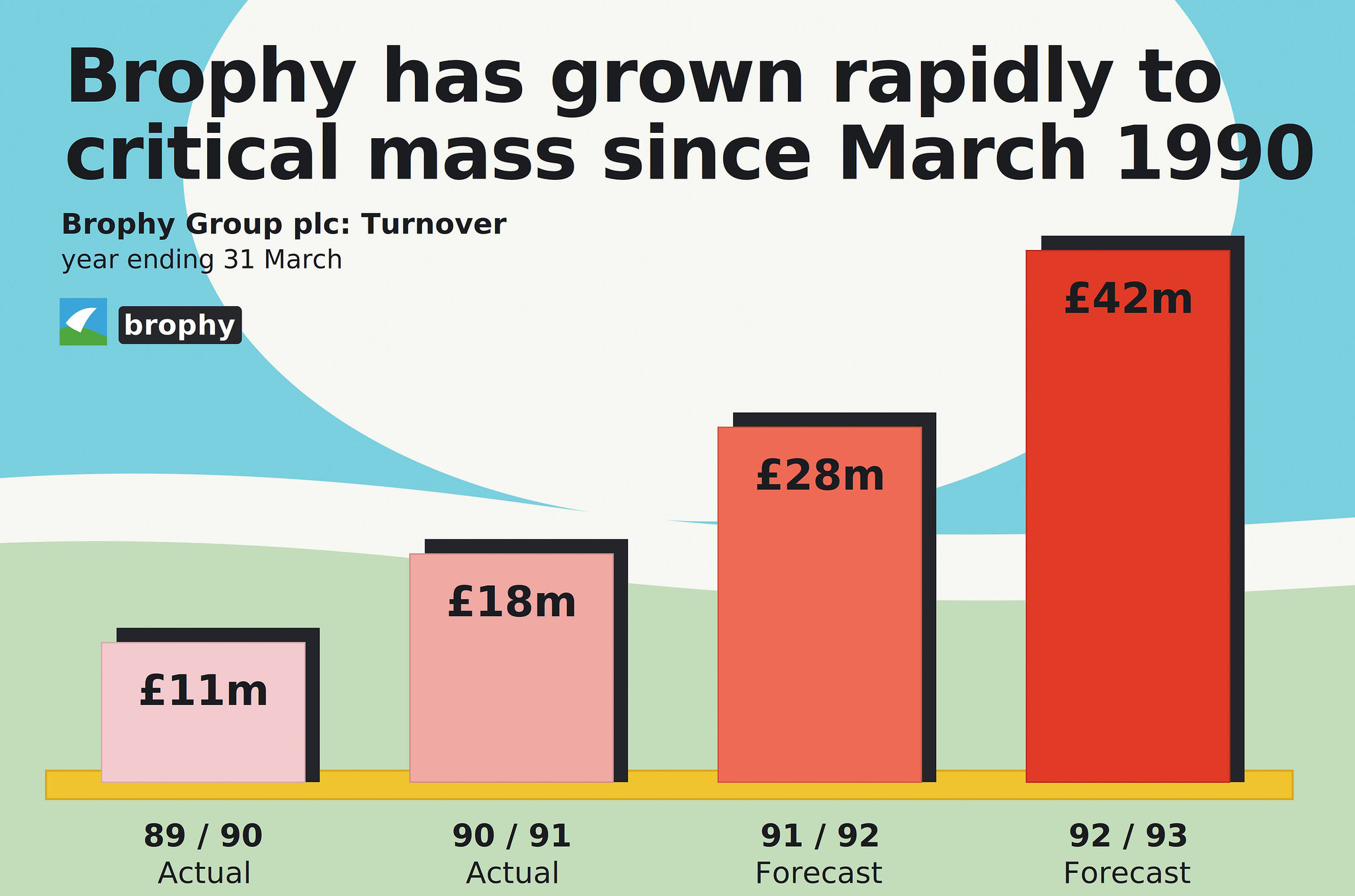
Tony Brophy built his family business from a garden shed into a major national grounds-maintenance company. Then Thames Water entered the story.
TONY’S JOURNEY
GARDEN SHED
A small family landscape business.
↓
88 LOCAL AUTHORITIES
Brophy became a major public-sector contractor.
↓
APPROXIMATELY 2,900 EMPLOYEES
The business expanded nationally.
↓
1986 – THAMESGRO
A pioneering joint venture with the publicly owned Thames Water Authority.
↓
1990 – THAMES WATER BUYS INTO BROPHY
Thames Water acquired 50 per cent of Brophy Plc.
↓
1994 – THAMES WATER TAKES CONTROL
The commercial relationship changed fundamentally.
LIQUID GOLD BLACK WATER
Tony Brophy’s account of what happened and what it tells us about the water industry today.
SIX NUMBERS THAT EXPLAIN THE CRISIS
291,492
monitored storm-overflow spill events in England during 2025
Environment Agency, 2026
75
serious pollution incidents caused by England’s water and sewerage companies in 2024
Environment Agency, 2025
470
Thames Water sewerage pollution incidents in 2024
Environment Agency, 2025
£18.5 BILLION
Thames Water statutory net debt at 31 March 2026
Thames Water, Annual Results 2025–26
£85 BILLION
Paid to shareholders by England and Wales’s privatised water companies since privatisation.
NB the University of Greenwich estimate is higher than Ofwat’s £52bn estimate.
£300 BILLION
Investment required in England and Wales’s water infrastructure over the next 25 years.
FROM THE GREAT STINK TO TODAY
In 1858 the polluted River Thames became so offensive that Parliament could no longer ignore London’s sanitation crisis.
Sir Joseph Bazalgette, the Victorian engineer who led the construction of London’s great sewer system, helped transform the capital’s public health.
More than a century later, the regional water authorities of England and Wales were privatised.
Today England again faces fundamental questions about polluted rivers, rising bills, infrastructure, debt, regulation and public trust.
LIQUID GOLD BLACK WATER follows that journey.
THIS IS BIGGER THAN THAMES WATER
Thames Water is the most visible example, but the problem is wider.
A household cannot choose another sewer.
A river cannot change water company.
A beach cannot negotiate with a storm overflow.
Water is therefore not an ordinary competitive product.
It is an essential public-health service delivered through regional natural monopolies.
WHAT SHOULD A WATER INDUSTRY EXIST TO DO?
THE CASE FOR A NEW WATER INDUSTRY
Tony Brophy argues that England needs more than tougher regulation of the existing model.
A new settlement should be built around; –
PUBLIC PURPOSE
PUBLIC HEALTH
CLEAN RIVERS
CATCHMENT GOVERNANCE
HONEST FINANCE
TRANSPARENT ASSETS
LONG-TERM STEWARDSHIP
PUBLIC ACCOUNTABILITY
LIQUID GOLD BLACK WATER
A remarkable personal story.
A documented history.
A corporate struggle.
A national scandal.

to win the respect of the intelligent people
and the affection of children;
to earn the appreciation of honest critics
and endure the betrayal of false friends;
to appreciate beauty;
to find the best in others;
to leave the world a bit better
whether by a healthy child, a garden patch,
or a redeemed social condition;
to know that one life has breathed easier
because you lived here.
This is to have succeeded.
Ralph Waldo Emerson
© 2026 - Tony Brophy