

Media
A national scandal told from the inside
SHIT SHOW — THE GREAT WATER ROBBERY
How London’s sewage became a private monopoly—and how I got dropped in the shit
LIQUID GOLD BLACK WATER combines personal testimony, documented history and political analysis to investigate one of Britain’s most urgent public-policy failures.
Author Tony Brophy brings an unusual insider’s perspective. His family company pioneered the beneficial reuse of Thames Water’s treated sewage sludge, formed the Thamesgro joint venture and was later acquired by Thames Water.
His account connects that personal experience with the wider story of privatisation, corporate debt, sewage pollution, regulatory failure and the struggle over who should control Britain’s water.

Tony Brophy is available for television, radio, podcast, newspaper and public-event interviews.
Why this story matters now
Britain is confronting fundamental decisions about the future of its water industry:
- Who should bear the cost of decades of underinvestment?
- What should happen to Thames Water’s enormous debt?
- Should customers rescue a failing financial model?
- Why did regulation fail to protect the public and the environment?
- Should essential water services remain under investor ownership?
- Will the Government’s proposed reforms deliver clean rivers and accountable water companies?
- How should Britain prepare for population growth, drought and more extreme rainfall?
These are no longer specialist questions. They concern every household, business, river, beach and community in the country.
LIQUID GOLD BLACK WATER provides journalists and broadcasters with a distinctive combination of personal experience, corporate history, environmental innovation and public-policy argument.
The story in brief
In 1986, Tony Brophy’s family landscape company formed Thamesgro, an innovative joint venture with the publicly owned Thames Water Authority.
The venture transformed treated sewage sludge from a costly waste product into manufactured soil for major land-restoration schemes, including Stockley Park and London Docklands. It was an early example of what would now be called the ‘circular economy’.
Brophy Plc grew from a garden shed into a major grounds-maintenance business, employing approximately 2,900 people and working for 88 local authorities.
Thames Water acquired 50 per cent of Brophy Plc in 1990 and took full control in 1994.
What began as a pioneering environmental partnership subsequently became, in Brophy’s account, a struggle between a family business and an increasingly powerful corporate organisation.
The book places that conflict within a much larger national story: the 1989 privatisation of England and Wales’s water authorities, the growth of corporate borrowing, investor returns, deteriorating infrastructure, sewage pollution and declining public trust.
Tony Brophy was dropped in the shit—but the greater scandal is that the British public was dropped in it too.
Media interview topics
Tony Brophy can speak about:
Thames Water from the inside
His personal dealings with Thames Water before and after privatisation, the creation of Thamesgro and the eventual acquisition of Brophy Plc.
The birth of a circular-economy business
How treated sewage sludge was converted into useful manufactured soils decades before “resource recovery” and “natural capital” became established environmental concepts.
From partner to prey
What can happen when a small entrepreneurial company creates commercial value within the orbit of a powerful monopoly.
The privatisation of water
How publicly created infrastructure passed into private ownership—and why the original model failed to secure public trust.
Debt, dividends and financial engineering
How corporate financing came to dominate the debate over the future of Thames Water.
Sewage pollution and public health
Why polluted rivers and coastal waters are not merely environmental problems but matters of public health, accountability and social justice.
Regulatory failure
How fragmented and reactive regulation allowed problems to accumulate across the water industry.
The future of Thames Water
The options for restructuring, public intervention, debt reduction and new forms of accountable ownership.
A practical way forward
The case for catchment-based water management, environmental solvency, long-term investment and democratic accountability.
Strong media angles
The entrepreneur who turned sewage into soil
The extraordinary story of how Thames Water’s sewage sludge helped restore major development sites—and created a valuable commercial opportunity.
The family firm acquired by a monopoly
A personal account of partnership, corporate power and alleged unfair dealing.
The public built it—private finance exploited it
How generations of public investment created the assets later transferred into private ownership.
From the Great Stink to today’s sewage scandal
The historical parallels between Victorian London’s sanitation crisis and Britain’s present failure to protect its rivers and coast.
Thames Water: too important to fail, but not too important to change
Why maintaining water services does not require every investor or creditor to be protected from financial loss.
The human consequences behind the statistics
Pollution figures represent real risks to swimmers, surfers, anglers, wildlife, tourism and communities.
What should replace the present model?
Public ownership, public-benefit companies, mutual structures and catchment-based alternatives.
Suggested interview questions
- How did you first become involved with Thames Water?
- What was Thamesgro, and why was it innovative?
- How did sewage sludge become a valuable landscaping resource?
- Why did Thames Water acquire Brophy Plc?
- When did the relationship begin to deteriorate?
- What does your experience reveal about the behaviour of large monopolies towards smaller businesses?
- How did privatisation change Thames Water?
- Who benefited most from the privatised water model?
- Why did regulators fail to prevent excessive debt and environmental decline?
- Should Thames Water be brought into public ownership?
- Who should pay for the investment now required?
- What would a financially and environmentally sustainable water system look like?
- What should the forthcoming Clean Water reforms contain?
- Why did you decide to publish this book now?
- What do you want readers—and government—to do after reading it?
About the author
Tony Brophy
Tony Brophy was a landscape contractor, now consultant, environmental entrepreneur, author and campaigner with more than fifty years’ experience.
He built Brophy Plc from a family business operating from a garden shed into what became, in his account, Britain’s largest grounds-maintenance contractor, employing approximately 2,900 people and securing work with 88 local authorities.
In 1986, Brophy established Thamesgro with the Thames Water Authority. The joint venture pioneered the beneficial reuse of treated sewage sludge as a component of manufactured soils for land restoration and major landscaping projects.
His later work has focused upon soils, water, carbon sequestration and nature-based environmental solutions.
LIQUID GOLD BLACK WATER brings together his personal experience of Thames Water, the history of London’s sanitation system and his argument for fundamental reform of Britain’s water industry.
About the book
LIQUID GOLD BLACK WATER – Britain’s Water Privatisation Scandal
How London’s Sewage Became a Private Monopoly and How I Got Dropped in the Shit
By Tony Brophy
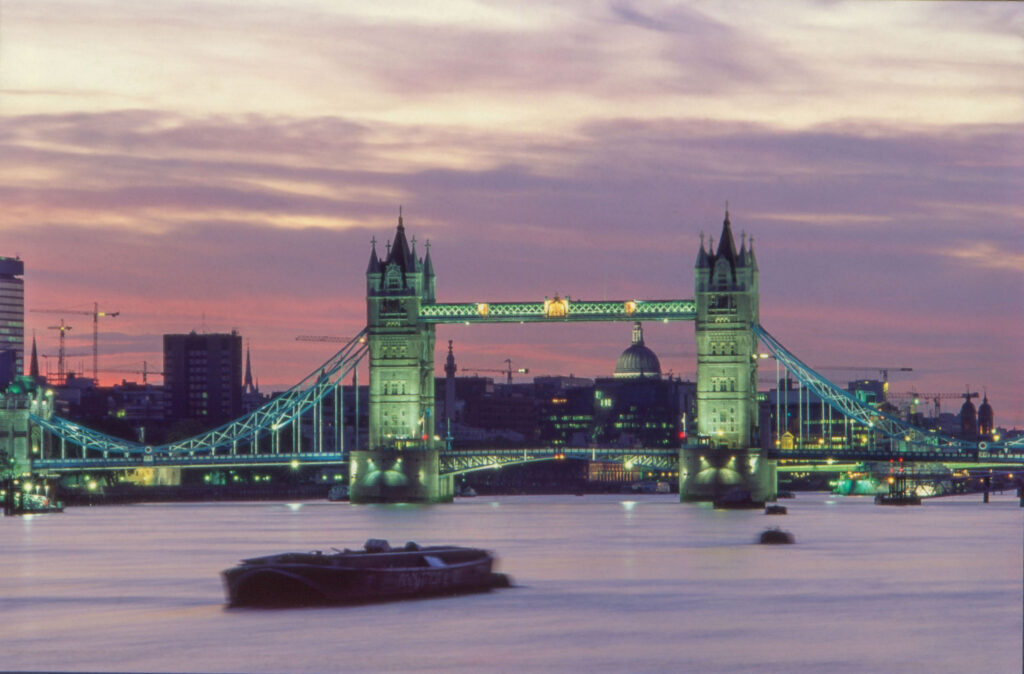
LIQUID GOLD BLACK WATER traces the history of London’s water and sewerage system from the night-soil men, cholera epidemics and the Great Stink to Bazalgette’s sewers, Thatcher’s privatisation programme and the present crisis surrounding Thames Water.
Part memoir, part industrial history and part public-policy investigation, the book examines environmental innovation, monopoly power, corporate debt, sewage pollution and regulatory failure.
Drawing upon documentary evidence, personal recollection and the work of leading thinkers including Professors Karen Bakker, Dieter Helm and Richard Murphy, Brophy argues for a water system founded upon public health, environmental responsibility, financial sustainability and democratic accountability.
Press materials
The following materials are available for editorial use:
- high-resolution front-cover image;
- author portrait photographs;
- short and extended author biographies;
- concise and extended book synopses;
- publication details and book specifications;
- selected extracts;
- chapter listing;
- interview questions and discussion topics;
- background chronology of Thames Water;
- supporting references and source notes;
- photographs and archive material, subject to individual copyright conditions.
Please check the accompanying usage and copyright information before reproducing any photograph, document or extract.
Review copies and extracts
Review copies are available for bona fide journalists, editors, producers, broadcasters, reviewers, booksellers and event organisers.
Requests to reproduce extracts should identify:
- the publication or programme;
- the proposed extract;
- the intended length;
- the publication or transmission date;
- print, broadcast and online territories;
- the relevant contact details.
Broadcast and event availability
Tony Brophy is available for:
- live and pre-recorded television interviews;
- radio news and current-affairs programmes;
- podcasts;
- newspaper and magazine interviews;
- documentary contributions;
- literary festivals and book events;
- environmental and public-policy conferences;
- university and professional lectures;
- panel discussions and public debates.
Interviews may be arranged in person or remotely.
Campaign connections
The book addresses the systemic failures underlying the sewage scandal dramatised in Channel 4’s three-part factual drama Dirty Business.
It also supports the growing public demand for reform represented by the Surfers Against Sewage petition hosted by 38 Degrees.
LIQUID GOLD BLACK WATER is an independent publication and is not produced by, sponsored by or formally affiliated with Channel 4, Surfers Against Sewage or 38 Degrees.
WATCH DIRTY BUSINESS SIGN THE PETITION
Press enquiries
For interviews, review copies, extracts, photographs or further information:
Media contact:
Tony Brophy
Email:
brophy.ma@gmail.com
Telephone:
07919193267
Publication date:
1st September 2026
Publisher:
BROPHY BOOKS
ISBN:
978-1-0369-9457-0
Stay informed
Journalists and producers can register for:
- publication announcements;
- new extracts and supporting evidence;
- media appearances;
- campaign developments;
- events and speaking engagements;
- updates on Thames Water and water-industry reform.
LIQUID GOLD BLACK WATER – BRITAIN’S WATER PRIVATISATION SCANDAL
A personal story. A corporate struggle. A national scandal.
The public built it. Private finance exploited it. Now Britain must decide how to reclaim it.