Summary
24 September 2026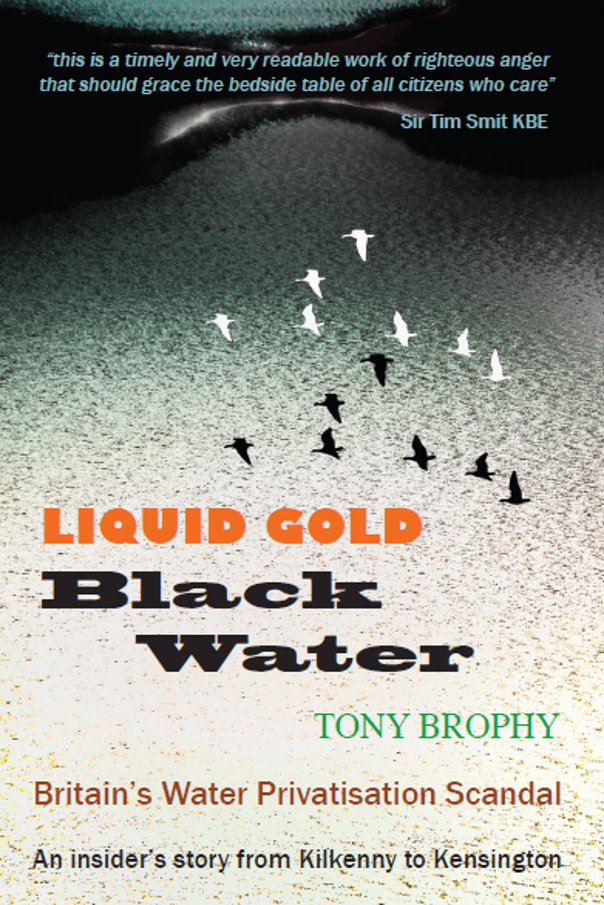
How London’s sewage became a private monopoly and how Tony Brophy got dropped in the shit.
LIQUID GOLD BLACK WATER is a blunt, personal and evidence-led indictment of England’s privatised water industry. It tells two connected stories. The first is the long public history of London’s water and sewage system: cesspits, night-soil men, cholera, the Great Stink, Bazalgette, public-health engineering and the creation of the infrastructure that allowed modern London to exist. The second is Tony Brophy’s first-hand account of how his Irish family landscape business entered Thames Water’s world, created value from treated sewage sludge, became a Thames Water-backed national contractor and then, in his telling, found partnership turning into control.
The book begins with a simple question that polite society prefers not to ask: what does a civilisation do with its shit? London’s answer was never merely technical. It was always political, financial and moral. The night-soil men carted human waste through dark streets so the city could survive. The New River brought cleaner water into the growing capital. Cholera exposed the deadly intimacy between drinking water and human excrement. The Great Stink of 1858 finally forced Parliament to smell what the poor had endured for generations. Bazalgette’s sewers were not built for shareholders, dividends or offshore ownership structures. They were built because London was poisoning itself.
That is the moral baseline of the book: water and sewerage are public-health systems before they are businesses.
From that foundation, LIQUID GOLD BLACK WATER follows the transformation of London’s sanitary inheritance into institutional power, then into privatised monopoly. The book argues that Margaret Thatcher’s 1989 water privatisation did not create a real market. Customers could not choose another pipe. Households could not switch sewerage provider. Rivers could not negotiate with competing drainage companies. Water and sewage are natural monopolies tied to geography, gravity, reservoirs, sewers, treatment works and public necessity. The promise of market discipline was therefore structurally false. What replaced public ownership was not competition, but regulation trying to imitate competition from outside the fence.
The book draws heavily on Professor Karen Bakker’s idea of water as an “uncooperative commodity”: essential, fixed, networked, environmentally embedded and resistant to ordinary market logic. Privatisation did not free water from the state. It created one of the most heavily regulated sectors in Britain, because the state could never walk away from drinking water, sewage, public health, river quality or infrastructure failure. Ownership could be sold, responsibility could not.
Tony Brophy did not enter this story as a journalist, academic or distant campaigner. He entered it as a landscape contractor with mud on his boots and risk on his balance sheet. In 1986, his family business formed Thamesgro, a pioneering joint venture with the statutory Thames Water Authority. Its commercial proposition was both earthy and radical: London had too much treated sewage sludge; major derelict-land projects needed organic growing media. At Stockley Park, treated sewage sludge could become part of a reconstructed landscape. Shit, properly treated, tested, regulated and blended, could become healthy, sustainable soil.
This was practical environmentalism before the phrase became fashionable. It was ‘circular economy’ before the slide decks. It was sewage sludge, subsoil, lorries, specifications, contracts, odours and public authority. Thamesgro turned a disposal problem into a resource. Stockley Park became the proof: an industrial-scale reclamation project where London’s processed waste helped create new landscape value.
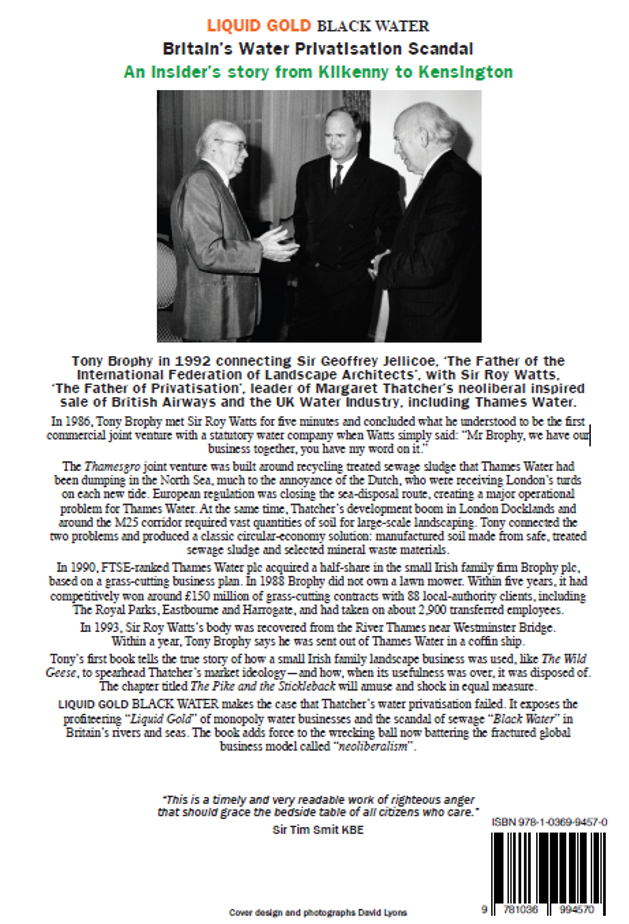
At first, Thames Water looked like a serious partner. Sir Roy Watts, then chairman of Thames Water Authority, cut through bureaucracy and gave Brophy its opening. The famous line “Mr Brophy, we have our business together. You have my word on it” becomes one of the book’s pivotal moments. It symbolises a time when Thames Water still carried the culture of engineers, public duty and practical problem-solving. Then the world changed.
After privatisation, Thames Water plc bought 50 per cent of Brophy in 1990. To Tony Brophy, it felt like validation: a major water company recognising the strategic value of an Irish family landscape business that had grown from modest beginnings into a national contractor. Brophy’s “Wider Opportunity” was ambitious: use local-authority grounds-maintenance contracts as operational bridgeheads into public-service, environmental, drainage, utility and land-reclamation work. Grass cutting was not merely grass cutting. It was access to wider market opportunities.
Under compulsory competitive tendering, local authority work opened to competition. Brophy grew exponentially , winning major term contracts with councils and public bodies. It developed from a family landscape contractor into a large national grounds-maintenance and environmental business. But growth in contracting is dangerous. Every new contract requires mobilisation, payroll, machinery, depots, supervisors, cash and bank support before profit arrives. Brophy’s expansion brought opportunity, visibility and vulnerability.
The emotional and corporate centre of the book is the shift from partnership to control. When Thames Water moved from 50 per cent to 60 per cent ownership, Tony Brophy experienced the change as the moment equality gave way to majority power. The difference was only ten per cent on paper. In practice, it altered the atmosphere. The founder still had the story, the instinct, the relationships and the scars. Thames Water had the votes.
The book does not pretend that every Thames Water executive acted maliciously. It is more subtle and more dangerous than that. It argues that institutions can harm without a single pantomime villain. A large utility can pursue its own logic; governance, risk management, reporting, control, capital protection and group strategy. A family contractor lives closer to payroll, weather, councils, banks and survival. When those cultures collide, the smaller party carries the sharper wound.
Chapter by chapter, the memoir widens into a national accusation. Brophy’s experience becomes a lens through which to examine the whole privatised water settlement; monopoly power, opaque networks, procurement barriers, Thames Water’s corporate transformation, Macquarie’s debt-driven ownership, financial engineering, dividends, debt, sewage pollution, regulatory failure and the collapse of public trust.
The later chapters connect the personal story to the public scandal. The book argues that Thames Water became the emblem of a wider failure: public-health infrastructure treated as an investible financial asset. The pipes remained in the ground; the language moved into balance sheets, leverage, dividends, holding companies, creditors and rescue plans. Financial engineering began to rival civil engineering. The river, when the system failed, received the consequences.
The book does not deny that post-privatisation investment occurred. It acknowledges improvements in drinking-water compliance, treatment works and some river conditions, but it insists that investment alone does not vindicate the model. The real question is whether the ownership structure protected customers, rivers, future generations and long-term asset condition or whether monopoly cashflows were turned into private returns while the public retained the ultimate risk.
The answer, the book argues, is now visible in debt, pollution and political crisis. Thames Water’s financial distress, sewage incidents, regulatory fines, public anger, Surfers Against Sewage, We Own It, Channel 4’s Dirty Business, the Heather Preen campaign, Richard Murphy’s “environmental insolvency” analysis and Professor Sir Dieter Helm’s catchment-based critique all point to the same conclusion – the old settlement has failed.
This is not merely a story about sewage in rivers. It is about ownership, truth, power and public legitimacy. If customers cannot choose another sewer, if rivers cannot switch supplier, if the public pays the bills, funds the rescue and bears the environmental risk, then the public has the right to ask who should own and control the system.
The book’s final argument is not nostalgic nationalisation for its own sake. It calls for a new water settlement built around public purpose, catchment governance, transparent accounts, asset stewardship, environmental solvency, open procurement, fair finance, long-term planning and democratic accountability. It argues that England needs a water system designed for the next century, a legacy worthy for our Grandchildren’s Grandchildren, not another short-term rescue of a broken financial structure.
LIQUID GOLD BLACK WATER is therefore part memoir, part public-interest investigation and part political warning. It is angry, but not merely angry. It is funny, but the humour is dark because the subject demands it. It follows the shit from cesspit to sewer, from sludge boat to Stockley Park, from Thamesgro to Thames Water plc, from public authority to private monopoly, from Macquarie to sewage scandal, from balance sheet to river.
Brophy’s central charge is simple; –
England inherited a public-health miracle, sold it as an asset, allowed it to become a financial instrument, and now expects the public, the rivers and the future to pay for the failure. The Victorians built the sewers because the smell reached Parliament. Now the stink is back.
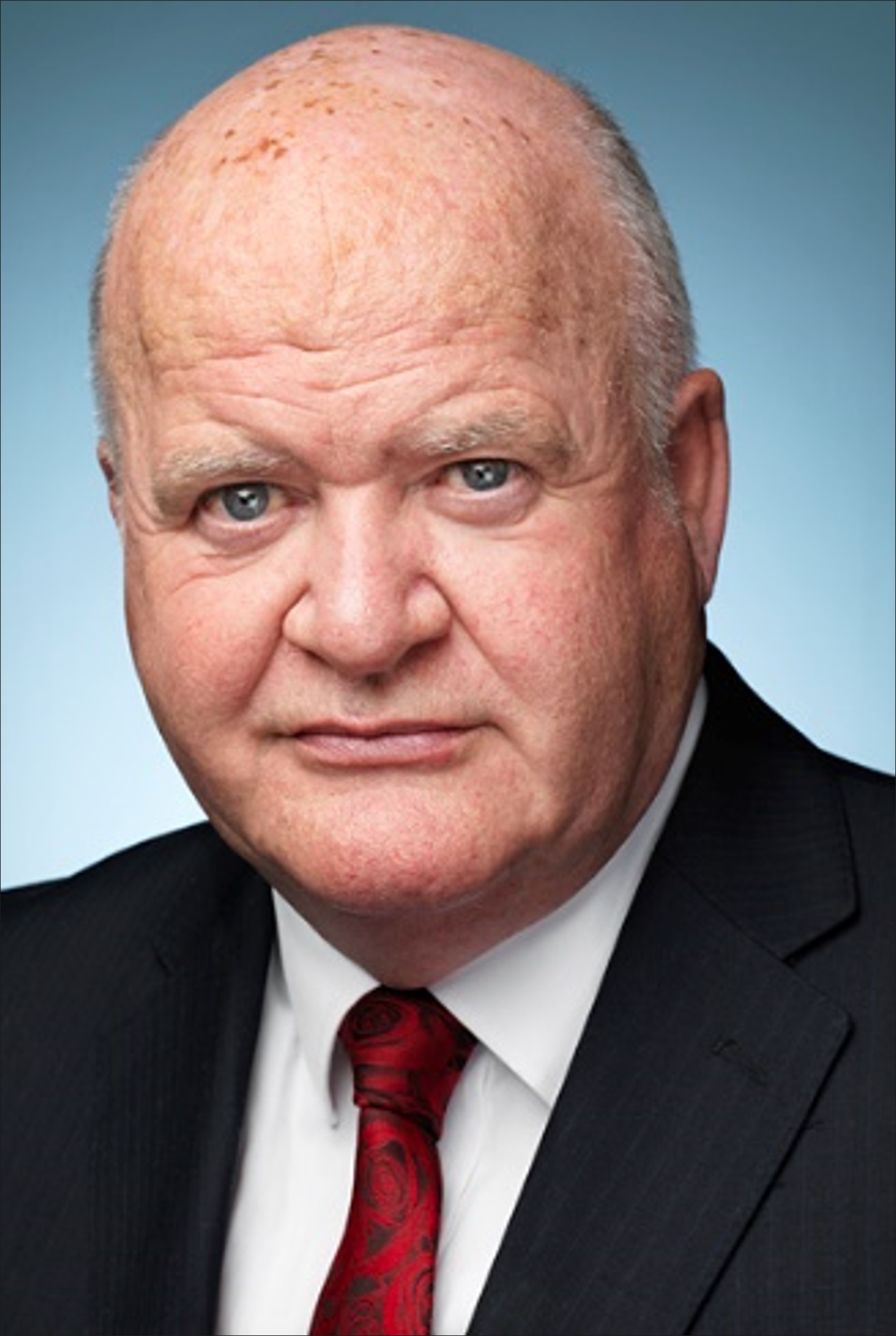
Born of Irish parents with a spade in his hand in Barnet London, and in business all his life with Kilkennyman father Mick Brophy, TONY BROPHY believes himself to be an Irishman and relates strongly to ‘The Wild Geese’. Tony is a British landscape and environmental entrepreneur whose career has spanned more than five decades.
Beginning in the landscape industry in 1970, with £2 capital and operating from a garden shed, he helped build the Brophy Irish family business from modest beginnings into Brophy Plc, a major national grounds-maintenance and environmental contractor. By 1994 Brophy employed 2,900 and worked in partnership with 88 local authorities around the UK.
Tony is a Landscape Expert specialising in ‘Nature-based-Solutions’, specifically grassland carbon removal to mitigate Climate Change, and is a Master Organic Gardener certified by GAIA College Canada. Brophy has been involved with the British Association of Landscape Industries (BALI) from the outset in 1972 acting as Honorary Secretary and Treasurer for over a decade, including being Vice-Chairman, before Brophy business absorbed all his time. Tony was the BALI judge at the UK’s first International Garden Festival in Liverpool in 1984. The Brophy landscape business won many international and national awards for their quality work. The Brophy Sculpture Garden in the 1982 Chelsea Flower Show was the first ‘modern’ garden at ‘Chelsea’.
Brophy was the Landscape Consultant to BAM Nuttall on the Queen Elizabeth Olympic Park for the London 2012 Olympics. In 2014 Brophy organised the UK’s first Sustainable Green Infrastructure Conference at the British Library where Brophy had built the piazza.
Brophy’s work placed him at the intersection of landscape construction, derelict-land reclamation, soil science, public procurement and utility infrastructure. In 1986 he initiated Thamesgro, a pioneering joint venture between CM Brophy and the statutory Thames Water Authority. The business explored the beneficial reuse of treated sewage sludge in manufactured soils, including work associated with Stockley Park and London Docklands. Thames Water Plc, the largest water company in the UK, acquired 50 per cent of Brophy Plc in 1990 and full control in 1994, giving Brophy an unusual first-hand perspective on the organisation’s transition from public authority to privatised corporation.
Over his career Tony has worked with leading academics and practitioners in horticulture, landscape, soils, ecology, natural capital and environmental management. Tony’s book, LIQUID GOLD BLACK WATER draws together that professional experience, the rise and fall of his family company’s relationship with Thames Water, the wider political history of England’s privatised water industry and the global contagion of neoliberalism. It is Tony’s first major work of narrative non-fiction.
Image courtesy Seamus Ryan Photography